
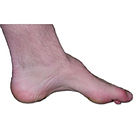
High Arched Feet
High arched feet, also known as pes cavus, describe a foot with an unusually high arch. You may also hear terms such as cavovarus, supinated feet or varus feet used to describe aspects of this foot shape.
High arches are less common than flat feet and can look and function quite differently from person to person. Some people have naturally high arches and experience no problems at all. For others, the shape and movement of the foot can contribute to increased pressure beneath the heel and forefoot, reduced shock absorption, ankle instability or recurring foot and ankle pain.
At MK Orthotics in Milton Keynes, we don't assume that a high arch needs to be changed simply because it looks different. The important question is whether the shape and movement of your feet are contributing to your symptoms or affecting how you move.
What are high arched feet?
A high arch means that the inside of the foot remains more elevated than usual when standing.
A high-arched foot may also be associated with an outward or inverted position of the heel. This can sometimes give the foot a more rigid or supinated appearance.
High arches can vary considerably. Some feet remain relatively rigid when you stand and walk, while others are more flexible and the arch changes shape when the foot is loaded.
This distinction is important because a high arch is not necessarily a problem in itself. The effect it has on pressure distribution, movement and function is more relevant when considering whether assessment or treatment may be helpful.
Rigid and flexible high arches
High arched feet are often considered in terms of how much the foot changes when it is bearing weight.
Rigid high arches
A rigid high-arched foot tends to remain relatively fixed when you stand and walk.
Because the foot has less ability to adapt to the ground, it may provide less natural shock absorption. Pressure can become concentrated underneath areas such as the heel and the ball of the foot, particularly around the big toe joint.
This can sometimes contribute to:
-
Forefoot pain
-
Heel pain
-
Pain or pressure beneath the big toe joint
-
Hard skin or calluses
-
Reduced comfort when standing or walking
-
Ankle instability
-
Recurrent ankle sprains
-
Peroneal tendon problems
A rigid high arch does not automatically mean that these problems will occur. The effect depends on the individual foot, lower-limb movement, activity levels, footwear and other factors.
Flexible high arches
Some high-arched feet are more flexible and change shape when weight is placed through them.
The arch may lower to some degree during standing or walking, meaning the foot can behave differently from a rigid pes cavus foot.
Flexible high arches can sometimes be associated with problems more commonly seen in other foot types, including plantar heel pain and plantar fasciitis.
This is one reason why looking at the foot in isolation is not always enough. Understanding how the foot behaves during movement can provide more useful information.
Symptoms associated with high arches
Some people with high arches have no symptoms at all.
When problems do occur, they may include:
-
Pain beneath the heel
-
Pain beneath the ball of the foot
-
Pain around the big toe joint
-
Foot fatigue when standing or walking
-
Hard skin or calluses caused by increased pressure
-
Ankle pain or instability
-
Repeated ankle sprains
-
Pain around the outside of the ankle
-
Peroneal tendon pain
-
Difficulty finding comfortable footwear
-
Reduced tolerance for prolonged walking, standing or running
The location of your symptoms can provide useful information, but it does not necessarily tell us what is causing them. A detailed assessment can help determine whether your foot mechanics are contributing to the problem.
High arches and pressure through the foot
One of the important features of a high-arched foot is the way it may distribute pressure.
A more rigid foot can have less ability to adapt to the ground during walking. This may result in greater pressure being concentrated through particular areas of the foot rather than being distributed effectively.
This can contribute to discomfort beneath the heel or forefoot and may lead to areas of hard skin or callusing.
However, pressure is only one part of the picture. Your ankle movement, muscle function, lower-limb alignment, walking pattern, footwear and activity levels can all influence how much stress is placed on different tissues.
High arches and ankle instability
Some people with high-arched feet have a tendency for the heel and foot to sit in a more inverted or varus position.
This can affect how the foot interacts with the ground and may contribute to a feeling of ankle instability or repeated ankle sprains.
If you regularly feel that your ankle is giving way, particularly during sport or on uneven ground, it is worth having the foot and ankle assessed rather than simply assuming that your high arches are the cause.
High arches and peroneal tendon problems
The peroneal tendons run along the outside of the lower leg and ankle and help provide stability and control of the foot.
Changes in foot position and lower-limb mechanics can influence the loading placed on these tendons.
People with high-arched or cavovarus feet may therefore experience problems around the outside of the ankle, including peroneal tendinopathy and lateral ankle sprains.
If you have persistent pain around the outside of your ankle, a proper assessment can help determine whether the problem is related to your foot mechanics or whether another cause should be considered.
High arches and plantar fasciitis
Although plantar fasciitis is often associated with flat feet, it can also occur in people with high arches.
A rigid high-arched foot may have less ability to absorb and distribute the forces associated with walking and running. This can increase stress through the structures underneath the foot in some people.
However, having high arches does not mean that you will develop plantar fasciitis.
If you have heel pain, it is important to establish the likely cause rather than assuming that your foot shape is responsible.
.
Are high arches caused by a medical condition?
Most people with high arches do not necessarily have an underlying neurological condition.
However, pes cavus can sometimes be associated with neurological disorders, including inherited conditions such as Charcot-Marie-Tooth disease (CMT).
CMT affects the peripheral nerves and can cause muscle weakness, changes in sensation and highly arched or very flat feet.
A high arch on its own is therefore not a diagnosis of CMT.
If high arches are accompanied by other symptoms such as progressive weakness, foot drop, significant changes in walking, reduced sensation, frequent trips or falls, or a relevant family history, it is important to discuss these symptoms with your GP or appropriate healthcare professional. Where CMT is suspected, further neurological assessment may be required.
There are also other possible reasons for a high-arched foot, including trauma or a foot shape that has developed without an identifiable underlying cause.
How are high arched feet assessed?
At MK Orthotics, we look beyond the height of the arch itself.
Your assessment may consider:
-
Your symptoms and where they occur
-
How long you have experienced the problem
-
Your daily activities and exercise
-
Previous injuries
-
Foot posture
-
Whether the foot is flexible or relatively rigid
-
Ankle and foot joint movement
-
Muscle strength and function
-
Lower-limb alignment
-
Your walking and running mechanics
-
Areas of increased pressure
-
Your footwear
-
Any existing orthotics or insoles
-
Whether your symptoms change with different activities or footwear
Where appropriate, video gait analysis may also be used to assess how your feet and lower limbs move during walking or running.
This helps us understand whether your high arches are simply part of your normal foot structure or whether they may be contributing to your symptoms.
Can orthotics help high arched feet?
Orthotics can be useful for some people with high-arched feet, but they are not automatically required simply because you have a high arch.
Where appropriate, an orthotic may be designed to work with your individual foot shape and help manage pressure distribution or influence aspects of foot and lower-limb loading.
The aim is not necessarily to try to force a high arch into a different shape.
Instead, the assessment looks at what your feet are doing, where you are experiencing symptoms and what changes may be appropriate for you.
For some people, orthotics may form part of a wider management plan. For others, different approaches may be more appropriate.
At MK Orthotics, we will only recommend custom orthotics where we believe they are appropriate for your individual circumstances.
Footwear and high arches
Footwear can make a significant difference to comfort when you have high arches.
A rigid or poorly fitting shoe may increase pressure around already sensitive areas of the foot. Depending on your symptoms, you may benefit from footwear that provides enough room for the toes and accommodates the shape of your foot comfortably.
The most suitable footwear will depend on your individual foot shape, activity and symptoms.
During an assessment, we can also consider your current footwear and how it interacts with your feet and any existing orthotics.
Your high arch assessment at MK Orthotics
Your initial consultation at MK Orthotics lasts approximately 90 minutes and includes a detailed assessment, with video gait analysis where appropriate.
We take the time to understand your symptoms, activities and goals before deciding whether orthotic treatment is appropriate.
If custom orthotics are recommended, they can be manufactured specifically for you.
If we don't think orthotics are appropriate, we will explain why and discuss other options that may be more suitable.
Why choose MK Orthotics?
At MK Orthotics, we take an individual approach to foot and lower-limb problems.
We don't prescribe orthotics simply because someone has a particular foot shape.
Instead, we assess how your feet function and how this relates to your symptoms, activity and everyday needs.
Our clinic is based in Blakelands, Milton Keynes, and we assess people with a wide range of foot and lower-limb problems, including high arches, ankle instability, plantar heel pain and other conditions affecting the way you walk and move.
Related conditions
You may also find the following pages helpful:
-
Peroneal Tendinopathy
Book an assessment
If you have high arched feet and are experiencing foot pain, ankle instability, recurring ankle sprains or difficulty finding comfortable footwear, a detailed assessment may help identify whether your foot mechanics are contributing to the problem.
MK Orthotics is based in Blakelands, Milton Keynes.
High arches do not automatically require treatment — the important question is whether they are contributing to your symptoms or affecting your function.